
Love’s Labour’s Lost Review at Shakespeare’s Globe London
Tonight I had the honour and absolute pleasure of seeing Love’s Labour’s Lost at Shakespeare’s Globe. One of my favourite venues in London, it immediately transports the audience back to Elizabethan England, even though it officially opened in 1997, about 230 metres from the original site.
⭐️ ⭐️ ⭐️ ⭐️
A witty and delightfully chaotic story of love, pride and intellectual vanity.
The story of the Globe dates back to 1599, when the King’s Men used timber salvaged from an earlier playhouse to build the original Globe Theatre. It eventually burnt down a few years later, making way for the second Globe, which operated successfully until the Puritans ordered the closure of all theatres in London in 1642. Remarkably, the current theatre is only around thirty years old, given how convincingly it recreates the atmosphere of its predecessor.
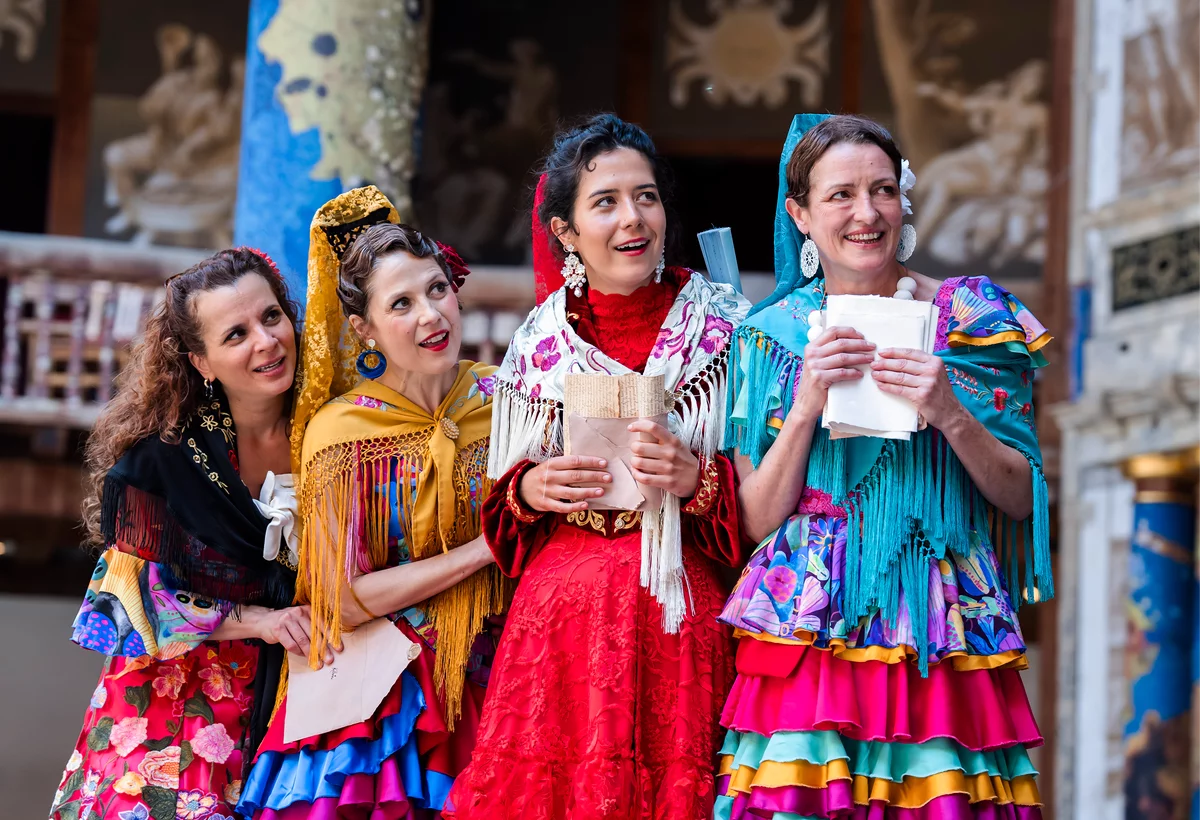
Love’s Labour’s Lost is one of Shakespeare’s early comedies, written in the late 16th century, and, in my opinion, one of his most challenging plays to follow in performance. It is a witty and delightfully chaotic story of love, pride and intellectual vanity. The play explores the gap between who people think they are and how they actually behave. The men believe they are rational, disciplined philosophers, yet the moment they meet the women, they become ridiculous romantics, writing love poems and sneaking around (dangerously relatable in 2026).
Love’s Labour’s Lost follows King Ferdinand of Navarre and his three noble companions, who vow to devote themselves to scholarship for three years by avoiding women and worldly pleasures. Their resolve is immediately tested when the Princess of France arrives with her three ladies on a diplomatic mission. Despite their oath, each of the men quickly falls in love, leading to a series of secret love letters, disguises, misunderstandings and comic attempts at courtship. The story leaves the audience with an unusually bittersweet and open-ended conclusion.
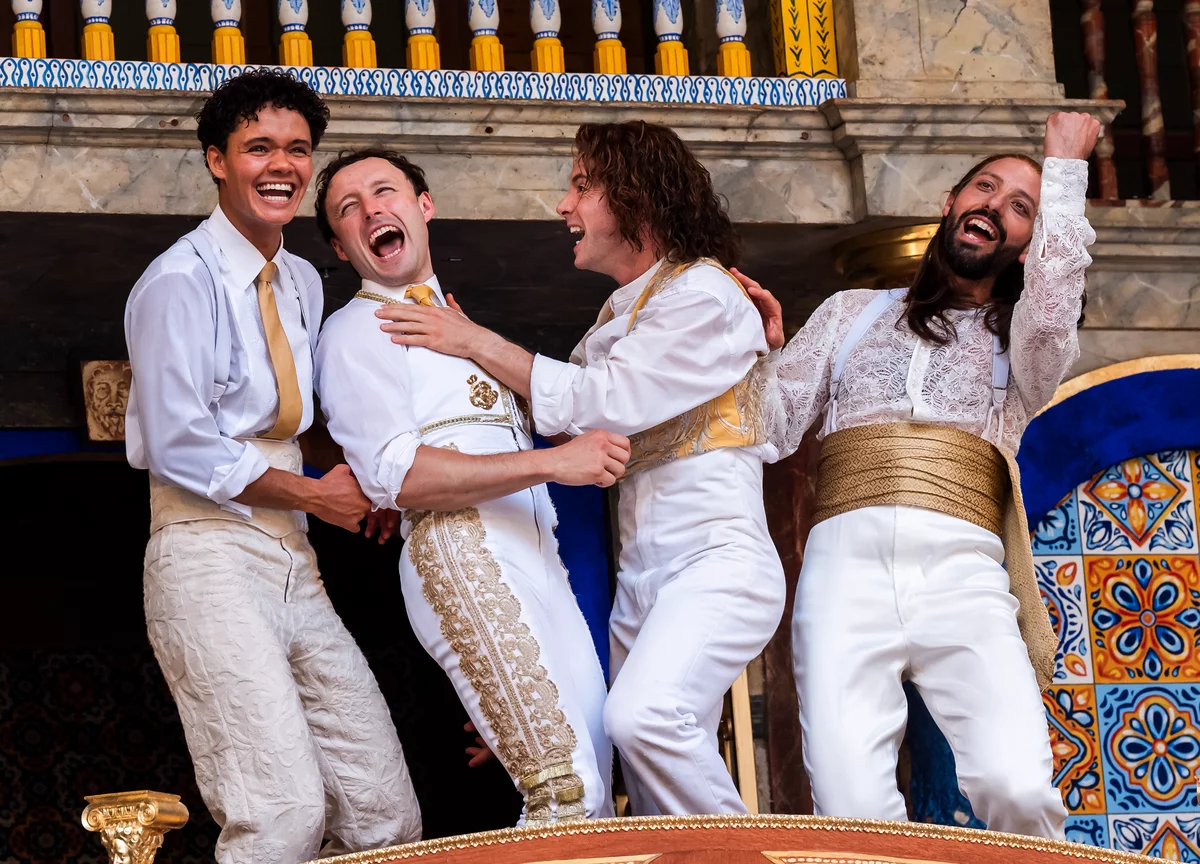
Although Shakespeare’s Princess is French, Indiana Lown-Collins, in her Globe directing debut, deliberately relocates the play’s emotional landscape to a vibrant Spanish world inspired by her own upbringing. The use of flamenco transforms the lovers’ awakening from a purely verbal game into something physical, passionate and deeply expressive. As a bonus, I asked my Spanish companion about the authenticity of the flamenco and the accents, and she assured me they felt entirely authentic. She even singled out Norah Lopez Holden, whose movement and stage presence were exceptional. She seemed completely at home in the choreography and had full command of the stage – the definite star of the show. I also have to mention Phillip Arditti, an audience favourite as Berowne, the most down-to-earth of the noblemen. Ned Costello, playing the King of Navarre, left me in awe with his focus and composure. Some of his monologues were interrupted by planes flying overhead and other unavoidable distractions, yet he never lost concentration for even a second.
The on-stage band and professional flamenco dancers were absolutely phenomenal, and the production simply would not have been the same without them. I also loved the predominantly Spanish and Latin American cast, whose chemistry and cultural authenticity made the production feel even more immersive.
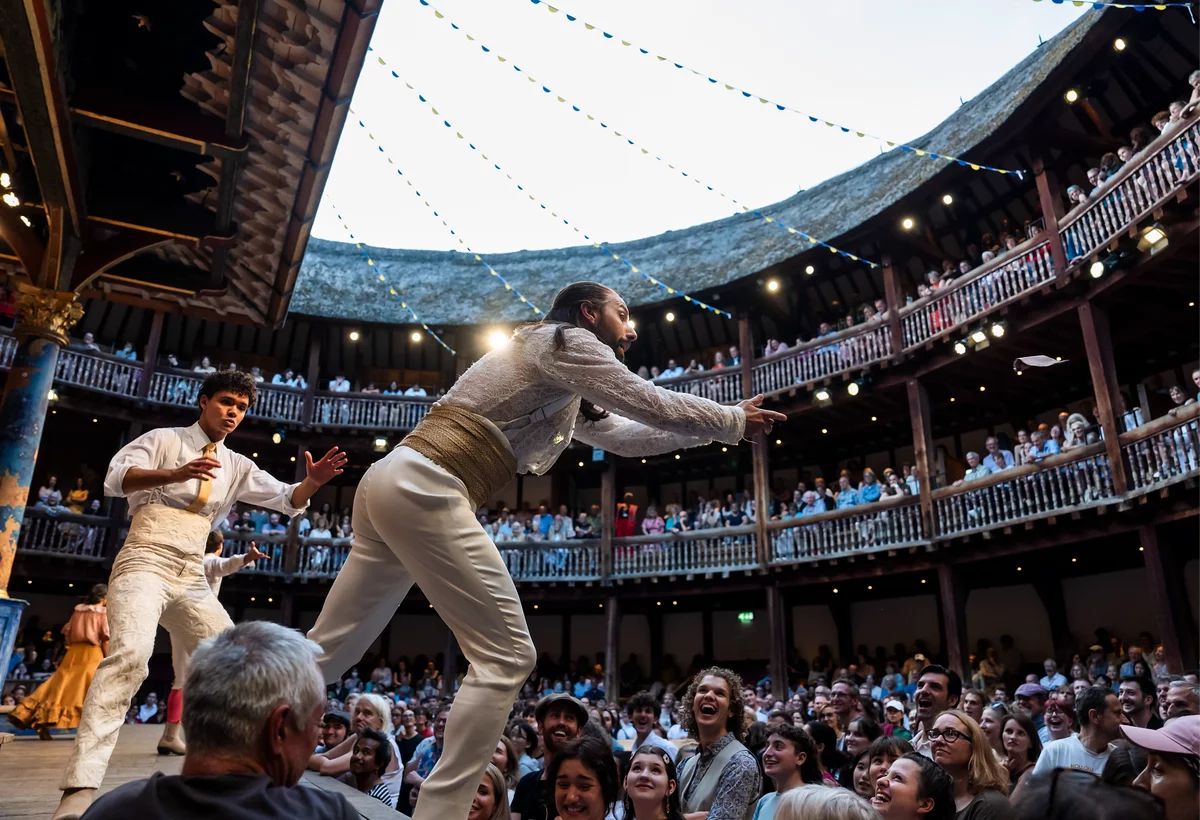
While the production excels in its visual identity and energetic performances, it is not without its flaws. The live music and expressive sounds of flamenco – the rhythmic footwork, castanets and percussion – often overpowered the dialogue, at times blending into a wall of sound. While I appreciate the Globe’s commitment to preserving the authenticity of the performance by avoiding amplification, I occasionally struggled to distinguish individual words, and sometimes even entire lines, particularly during the songs. I also couldn’t quite shake the feeling that some of the costumes looked rather artificial, with certain materials appearing more plastic than period-inspired, which slightly detracted from the otherwise immersive atmosphere.
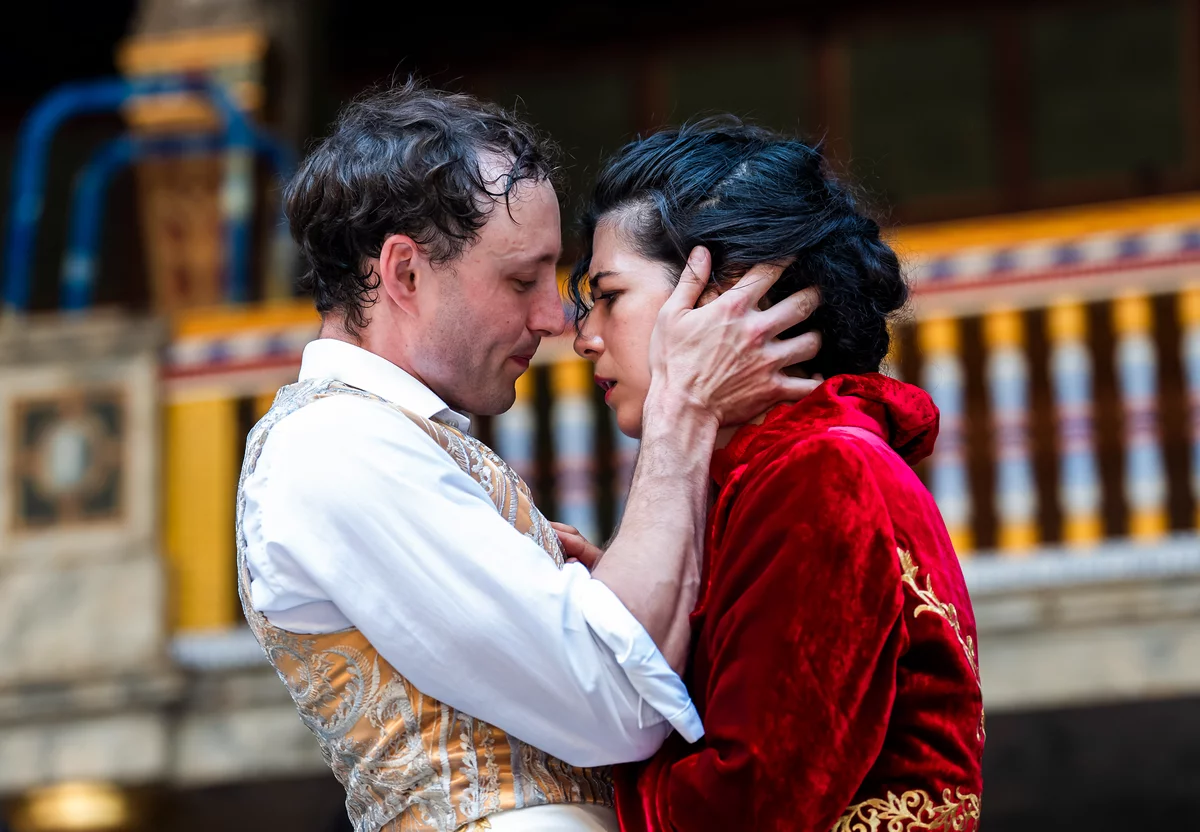
This is perhaps less a criticism of the production than an observation about the Globe experience itself. As one of London’s most iconic cultural landmarks, the theatre welcomes audiences from all over the world, yet Shakespeare’s language – particularly in Love’s Labour’s Lost – is undeniably demanding. Even as someone who regularly attends theatre, I found myself losing the thread of the dialogue at times. I couldn’t help but wonder how much more challenging the experience might be for visitors with limited English or little prior exposure to Shakespeare.
Love’s Labour’s Lost plays at Shakespeare’s Globe until 13 September 2026.
Where I Sat
I was seated in the Middle Gallery, Bay C, seats B3-B4. The side view of the stage was slightly obstructed by one of the supporting pillars, meaning I couldn’t always see the centre of the stage, although it didn’t affect my enjoyment too much. The legroom is almost non-existent, and the backless benches make it very easy to accidentally bump or kick the people sitting in front of you. One piece of advice: don’t skip the seat cushion – it is absolutely worth it! Next time, I would probably choose the front row of the galleries for a better view. It’s also worth remembering that Shakespeare’s Globe is an open-air theatre, so performances are affected by planes overhead, changing weather and other sounds from the city. If you’re planning a visit, come prepared with plenty of water and a paper fan. I definitely recommend taking a quick trip to Spain with Love’s Labour’s Lost this summer.
Have You Seen Love’s Labour’s Lost?
Will you be making a trip to see this fiery, flamenco-inspired production of Shakespeare’s comedy in the beautiful surroundings of the Globe this summer? Add your review to SeatPlan and let everyone know what you thought. You’ll even earn points towards theatre vouchers if you add a seat photo!
Reviewed by Aleksandra Zielińska for SeatPlan, July 2026
Comments