
Hadestown Review at Lyric Theatre London
Hadestown is known for its original Broadway run in 2019, starring Reeve Carney and Eva Noblezada, following an earlier concept album and an Off-Broadway run. It opened at the Lyric Theatre in 2024 but had previously played at London’s National Theatre in 2018, immediately before the Broadway opening. Based on the Greek myths of Eurydice and Orpheus with Hades and Persephone, it uses Anais Mitchell’s blend of folk, jazz and R&B to tell their stories. It is a tale of struggle, love, hell, release and renewal, as Eurydice falls for Orpheus despite herself, but hunger drives her to make a deal with Hades for survival.
⭐️ ⭐️ ⭐️ ⭐️
The show’s combination of classic myths and a refreshing folk-jazz score makes the recent extension well deserved, with the new cast keeping the production fresh.
Performances – 4/5 ⭐️
The show opens with us being introduced to Eurydice by Hermes, who is the narrator throughout, played by Clive Rowe. The band are set to the sides and rear of the stage and is part of the performances. The opening score is very lively, which meant that we could not hear Hermes clearly, possibly due to the louder band. Hermes’ later songs, especially the acapella were clearer and more solid with more charisma.
Eurydice, played by Bethany Antonia, was expressive from the start, successfully portraying emotion with her eyes plus I enjoyed her natural accent. Orpheus was covered by Sebastian Lim-Seet, who normally plays a worker. His Scottish accent delivered his words with clear vocals, which had the power to convey his love and determination with the acceleration of the story in Act 2. He was perfect for the role, which he performed with the necessary naïve innocence as he meets Eurydice and falls directly.
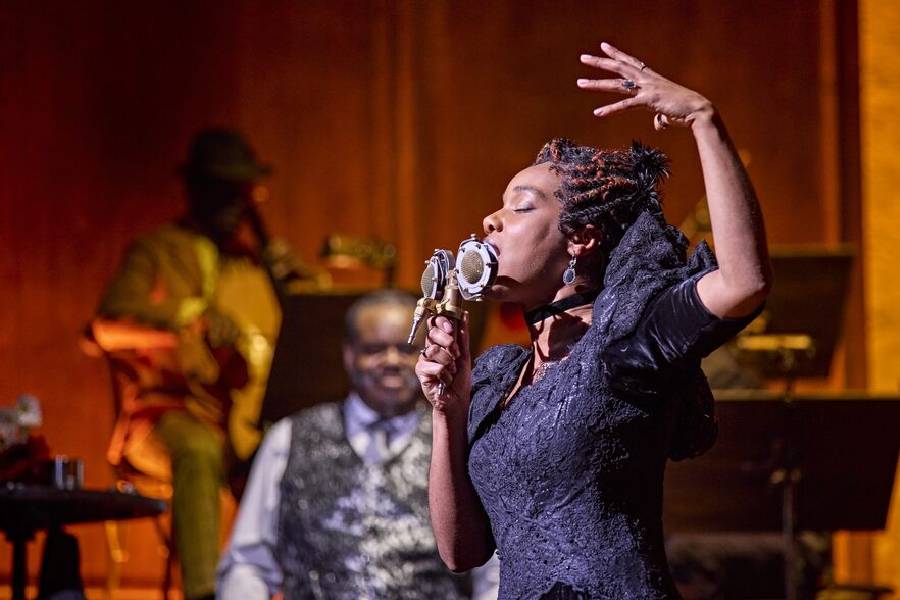
We also meet Persephone played by Rachel Adedeji early on when she is living her free and bright life up top out of Hades’ dark shadow. The carefree and fun persona is conveyed by the perfect performances, as are the darker more emotive scenes later once Persephone is reunited with her husband, Hades, down below in the underworld later. Alastair Parker as Hades brings impressive stature to his godly role. His accent implies a gang boss element as he controls all of the workers who have signed their life to him in his world behind the wall but he could have been directed at times as a more menacing character.
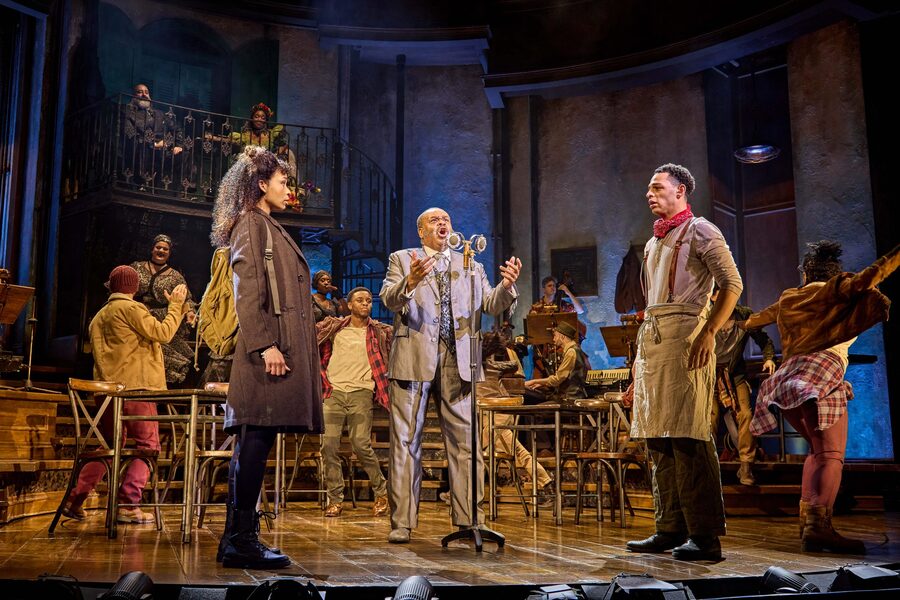
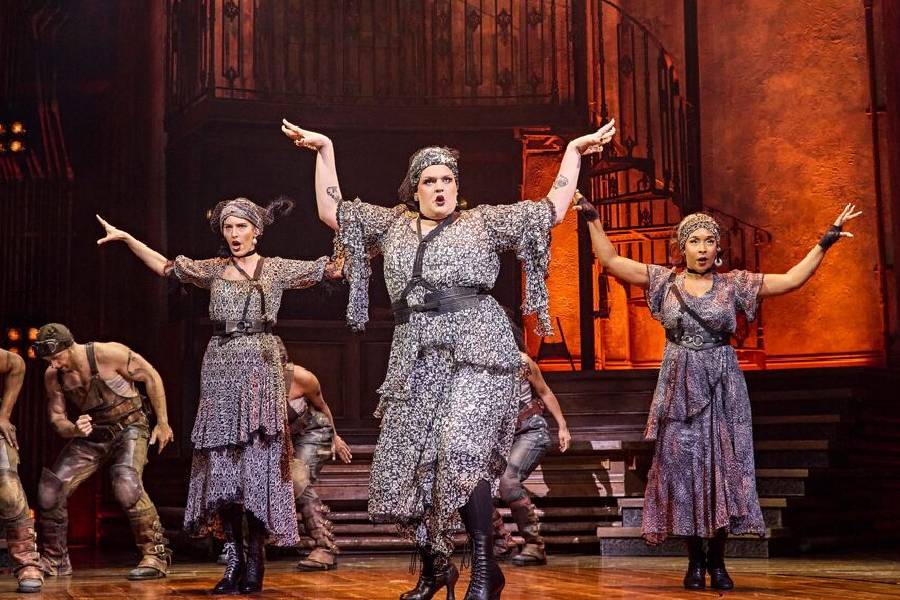
The workers are key to portraying what becomes of those under Hades’ control as they are subjugated to the repetitive work routine, losing their own identities. Similarly the Fates are essential and stand out support who weave themselves throughout the story, each with individually stunning voices but exquisite blends, often whilst playing their own instruments on stage alongside the band too.
Story, Music & Writing – 5 /5 ⭐️
Most people are familiar with the Greek myths which form the core of the story. However the writing still pulls you into the story so that you want and believe that Orpheus will successfully journey back out of Hades’ industrial hell landscape to the light up top with Eurydice so that their love can flourish in the light. You do believe that Hades and Persephone reconnect as Hades is reminded by Persephone about how they fell in love which is why Hades gives the young couple a chance to escape from the contract which Eurydice made with him. The audience’s gasp when they realise what the outcome is as Orpheus looks back is testament to how they are locked into the story.
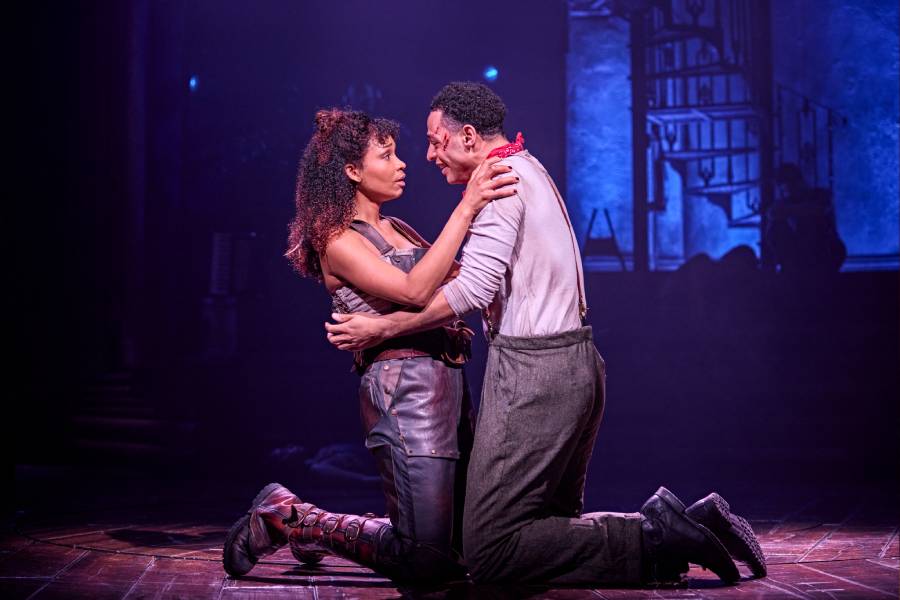
The story is completely told by music and song, without spoken sections. This enhances the constant flow along with song repetitions, which keep the production moving. The music invoked a sense of being transported to the early 20th-century Deep South, with its Southern blues and jazz style blended into a musical theatre setting.
This setting appeared to be American 1920s/30s depression which explains Eurydice’s predicament, alongside prohibition with Persephone taking refuge and release from darkness with sips from her flask. Her dress is bright with colourful flowers in her loose hair up top in contrast with black dress when she is below with black netted restricted hair.
Hades, perhaps as gang leader, controlled the desperate in the dark industrial underworld setting. Classic industrial lamps swing in darkness in a key scene. In contrast the world above is brightly lit.
The balcony is a permanent fixture high at the rear of the stage, like the threat of Hades and dark desperation always there. This is where Hades has his office and to which Eurydice enters when she signs herself over to that world so it has a symbolic as well as practical presence.
Staging & Lighting 5 /5 ⭐️
The constant flow mentioned above is supported further by the central turntable which effectively portrays the repetitive nature of the workers’ tasks, plus is particularly key in building tension in the long walk out of hell scene. The central section rises and falls to depict descending to hell.
The constant flow played out in the end as Hermes stepped up and began to tell the tale again. The opening was repeated which projected hope that things would play out differently another time around. This theme was supported by Persephone returning to the light as Spring comes around every year with new life. This positive ending was further supported when Eurydice pulled Orpheus’ flower from her pocket, suggesting that perhaps something could be different this time around.
Where I Sat
I sat in Stalls L24. This was the end of the row about halfway back, but not under the overhang of the Dress Circle. I could not see the band sitting on my left of the stage, but otherwise the view was clear, and I could see all of the performance. This was the better side to sit for a similar restriction, because Orpheus enters and exits from the band’s position on the right, so this was completely in view throughout. The entire height of the stage was used, namely Hades’ balcony filled the rear top of the stage. This could be cut off by the overhang from above layers although this was not an issue for this seat. I enjoyed the position as it was close enough to see expressions but far enough to be able to take in the stage as a whole.
Have You Seen Hadestown?
Have you embarked on a journey to the underworld with this bold, unforgettable story of love? Add your review to SeatPlan and let everyone know what you thought. You’ll even earn points towards theatre vouchers if you add a seat photo!
Reviewed by Candace Ashby for SeatPlan, May 2026.
Comments