
The Seven Deadly Sins / The Human Voice Review at Charing Cross Theatre
A double bill of two short operatic works plays a limited season until 19 September, so you’ll have to be fast to catch this musical treat. As a lover of chamber opera, I was thrilled to see both Poulenc and Kurt Weill brought to the stage, and both were performed in English translations that make an accessible introduction to the pieces for theatre lovers wanting to try something different.
⭐️⭐️⭐️⭐️
An accessible introduction to the pieces for theatre lovers wanting to try something different.
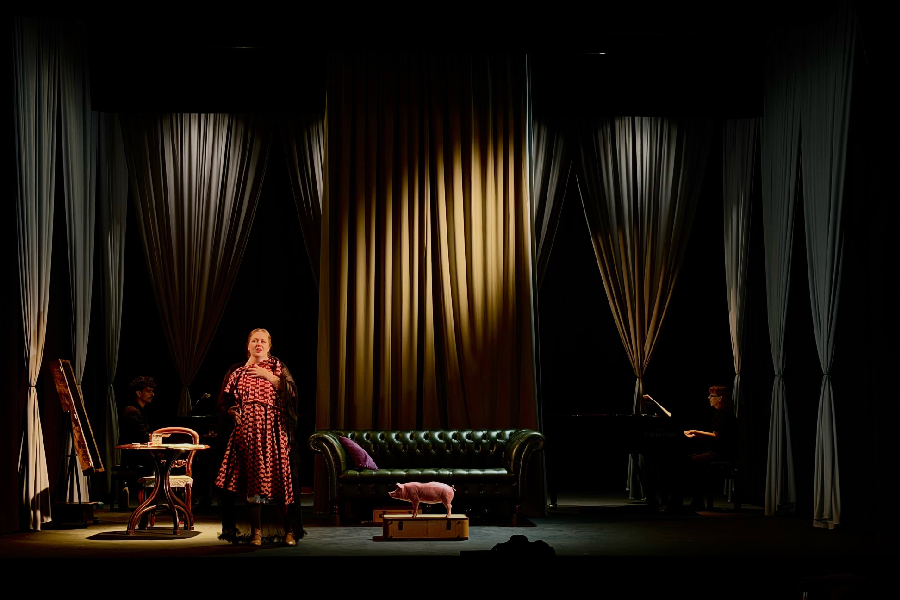
Poulenc’s La Voix Humaine (The Human Voice) is a one-act opera for a solo soprano and orchestra, in which the anonymous woman referred to as Elle is mostly in a telephone conversation with her former lover. It is based on Jean Cocteau’s 1928 play, when the telephone was still not in widespread household use. The opera shares the novelty of hearing only her side of the conversation, as the audience pieces together the details of her situation and bears witness to her psychological collapse.
Kurt Weill’s The Seven Deadly Sins was his last major collaboration with Bertolt Brecht, and another chamber sized music theatre work, originally described as a sung ballet. A showcase for Lotte Lenya, the piece is a harsh exploration of morality, written when Weill left Germany in 1933 amidst political upheaval.
Director Alejandro Bonatto has conceived of bringing these two masterpieces together as if they are the same woman – the same character at different moments in a single life. It allows us to reflect on her struggles, firstly against the world around her, and then the world within.
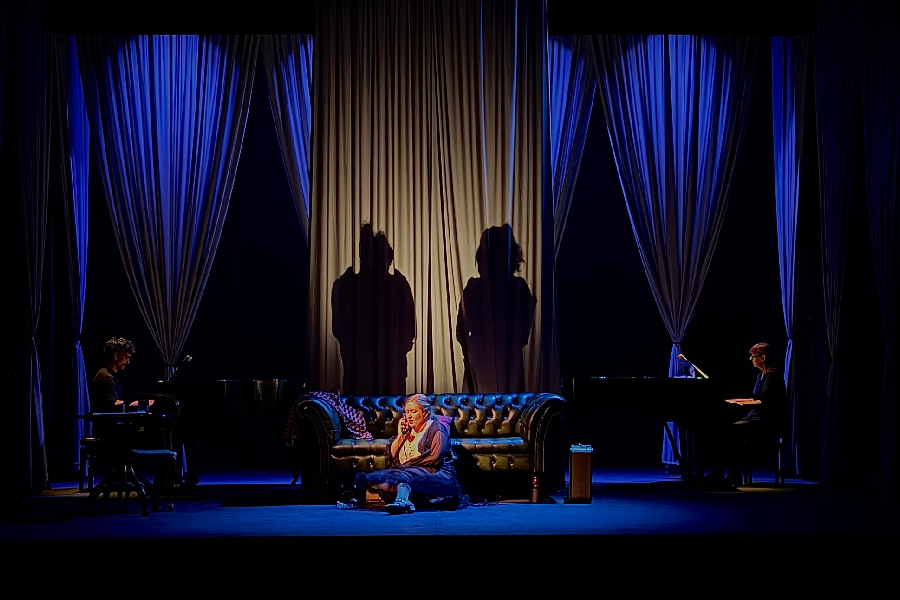
The Charing Cross Theatre is a challenging venue for chamber music, with a noisy stage floor and the odd train rumbling past, but that somehow suits the dramatic nature of these pieces as the protagonists Anna and Elle each try to cope with the world around them and their isolation.
There is outstanding work from the two musical directors, Elspeth Wilkes and Adrian Salinero, who impressively perform the piano reductions of these works, supported by Kepa Malgorzata on percussion and Salinero doubling on a solo flute for one of the Elle arias. This is complex music and both Wilkes and Salinero bring a full palette of colours to the piano scores, making it an evening of superb musicianship. With only 3 singers and 3 musicians, each performer is absolutely vital and Bonatto ensures that the musicians are effectively integrated into the dramatic context of both pieces.
Katherine McIndoe takes on both leading roles of Anna and Elle, with her lustrous soprano always emanating a gentle ease. She seems especially suited to the Poulenc and it would be wonderful to hear her sing this in the original French. Her emotional devastation by the end is truly felt after a relentless solo performance.
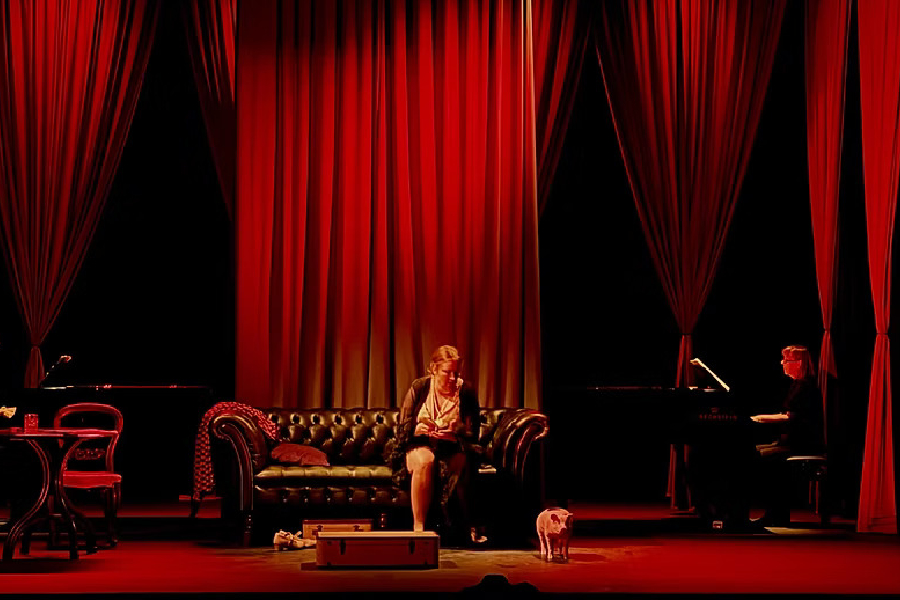
The male quartet who play the family in The Seven Deadly Sins is reduced to just one tenor and baritone in this production, affording the performers opportunities for extra comedy in which they both excel. Tenor Harry Grigg has a bright ringing tone, always expressively phrased, and brings his characters to buoyant life. Baritone Phil Wilcoxen travestie as Anna’s mother gets plenty of laughs and truly captures the Brechtian style in his performance.
These are wonderful pieces of 20th century music theatre and it’s very interesting to see them side by side. To imagine Anna and Elle as the same woman, and witness all her struggles, only exacerbates her unhappy ending.
The Seven Deadly Sins / The Human Voice plays at Charing Cross Theatre until 19 September.
Where I Sat
For this show, I sat in F4 of the Stalls. The seating in Charing Cross Theatre is comfortable, with ample legroom. The rows in this theatre are short, so even seat 4 feels quite central, with a good, clear, close view of the action unfolding on stage.
Have You Seen The Seven Deadly Sins / The Human Voice?
Will you be making a trip to see this alternate piece of theatre during its limited run this month? Add your review to SeatPlan and share what you thought. You’ll even earn points towards theatre vouchers if you add a seat photo!
Reviewed by Patrick Jeremy for SeatPlan, September 2026.
Comments