
Seat Plans and Ratings for West End Theatres
London’s West End is home to some of the world’s most famous theatres, staging everything from blockbuster musicals and star-studded dramas to exciting new work. Alongside grand historic playhouses with ornate auditoriums and plush interiors, you can also find some more contemporary venues.
West End Theatres List
There are 40 West End theatres with most located on or around Shaftesbury Avenue, Piccadilly Circus, The Strand, Covent Garden and St Martin’s Lane. Some, like the Victoria Palace Theatre, are a bit further south towards Victoria.
Explore our complete list including opening dates, seating capacities and seat ratings from real theatregoers.
You are free to download and use our seating plans on your website, under the Creative Commons license we just ask for a link back to SeatPlan giving us credit for the image.
Which West End Theatre Has the Best Seats?
According to reviews submitted by SeatPlan users, the top three West End theatres with the best seats are:
- Gillian Lynne Theatre (4.64/5)
- Trafalgar Theatre (4.61/5)
- Dominion Theatre (4.58/5)
Theatres with the highest audience ratings tend to be more modern buildings – for example, the Gillian Lynne was built in the 1970s – or benefit from auditorium refurbishments and fewer restricted views.


Venues with pillars or other structural features that obstruct the view, or that have less legroom, tend to feature at the bottom of the table. Examples include the Harold Pinter Theatre (4.09/5) and His Majesty’s Theatre (4.08/5) which both have a lot of pillars at the rear of the Stalls.

How Does SeatPlan Rate Theatre Seats?
SeatPlan has thousands of seat reviews and photos submitted by real theatregoers, helping audiences make informed decisions about where to sit.
- A single seat rating combines the reviewer’s scores for view, comfort and legroom
- The theatre ratings above are the average score for every seat review submitted at each theatre
A theatre’s overall rating doesn’t reflect the experience from every seat. For example, limited legroom or restricted views in one section of the auditorium can bring down the average.
You can explore all reviews and photos at a venue on our interactive seating plans and during the ticket booking process, helping you compare and book the best seats for your visit.
What’s On at West End Theatres?
The West End is home to some of the best theatre not just in London but in the world, with long-running musicals like Les Miserables and The Phantom of the Opera still very popular. Modern musicals including The Book of Mormon and Hadestown are also available to book, alongside a constantly rotating range of plays and newer work.
Check out our West End shows listings to see what’s on this year.
What Is the Biggest West End Theatre?
The London Coliseum is the West End’s largest theatre. It has a capacity of 2,383 seats, making it about six times the size of the West End’s smallest venue, the Arts Theatre!
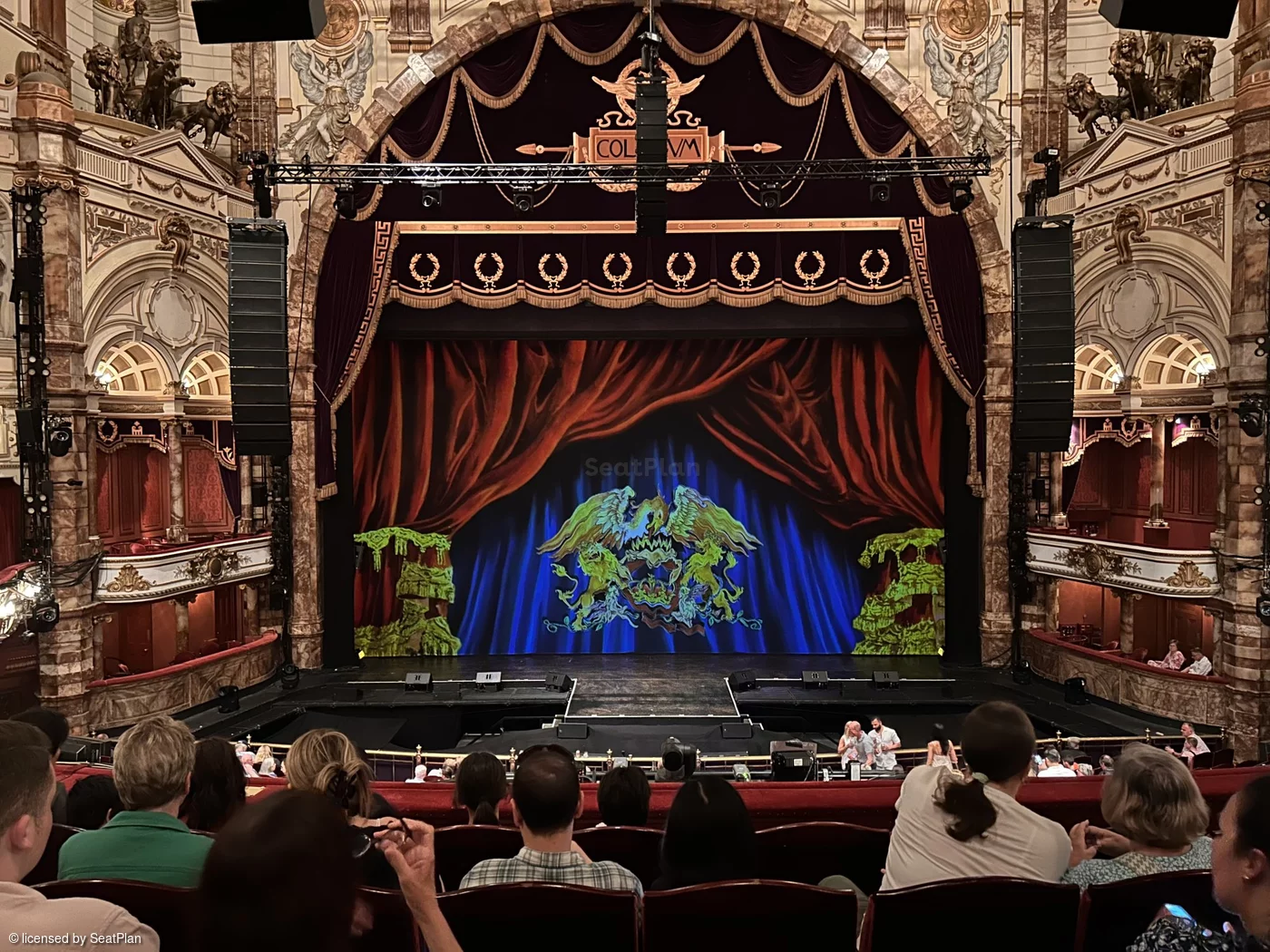
Other big London theatres include the Apollo Victoria Theatre (2,328 seats), London Palladium (2,327 seats), Theatre Royal Drury Lane (1,981 seats) and the Lyceum Theatre (2,214 seats).
What Is the Oldest West End Theatre?
Theatre Royal Drury Lane is the oldest theatre site in the West End, with a venue first opening on the site in 1663 under a royal charter from King Charles II. Until 1843, it was one of just two theatres in London that had a licence to produce “legitimate drama” (AKA spoken word plays) in London. The other was Theatre Royal Covent Garden (now the Royal Opera House).
The current theatre dates back to 1812, and was designed by architect Benjamin Wyatt. It is the fourth Theatre Royal Drury Lane – two earlier buildings were destroyed by fire, in 1674 and 1794.
Why is London’s Theatre District called the “West End”?
The theatre district is located in Central London, but just to the West of what is known as ‘the City of London’; the commercial district surrounding tube stations such as Bank and Monument. In the early 19th Century, areas West of Charing Cross were highly fashionable and this is when the term ‘the West End’ became widely used.
While the urban sprawl of London now extends much farther West than the theatre district, the majority of popular theatres are located in what was traditionally the Western end of the city, before it merged with the nearby city of Westminster to become the city recognisable today.

Comments